Your CPO Program Is a Black Box to AI. Here's Why That's Costing You Sales.
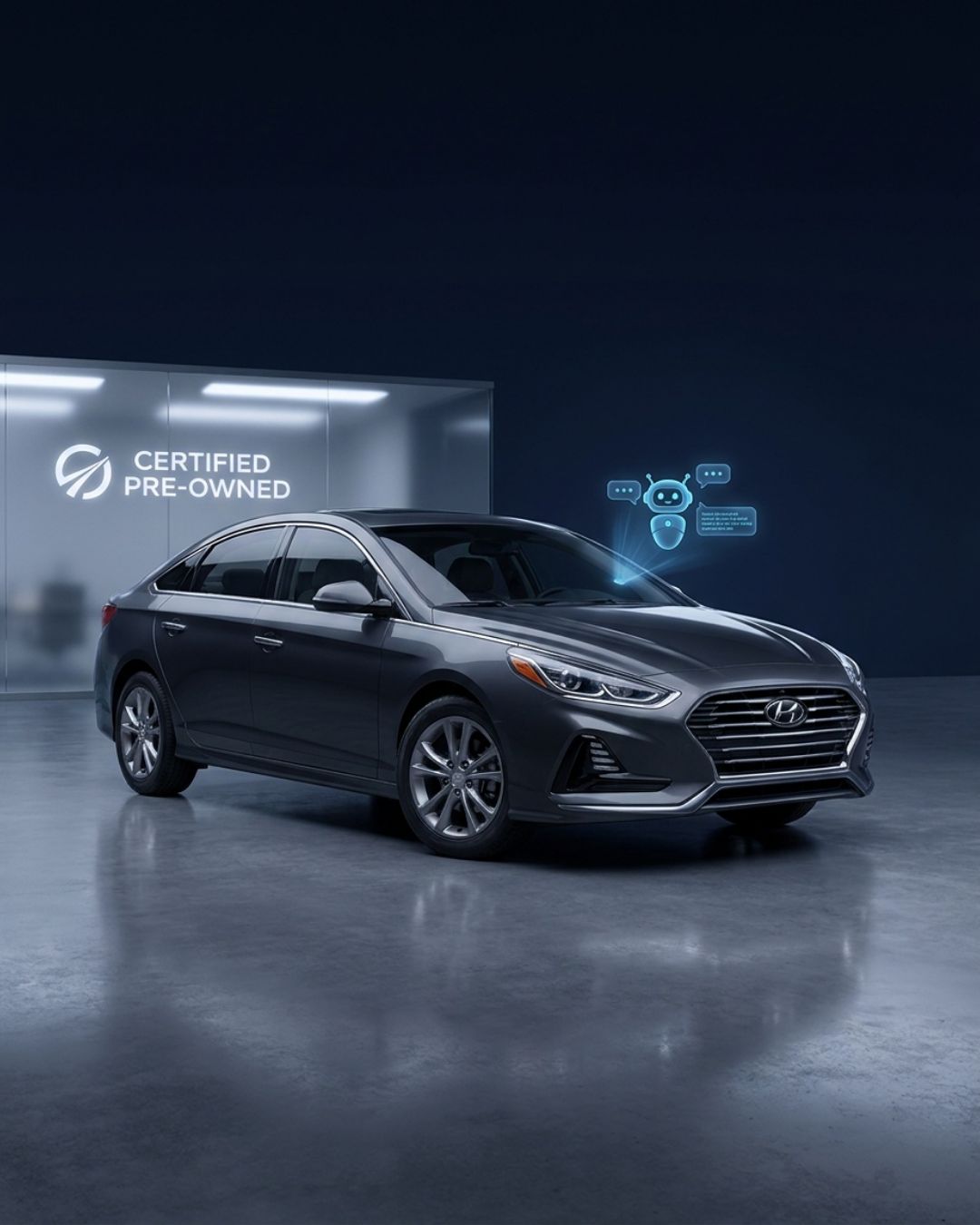
A question I've started asking at dealer group meetings: "If a shopper typed 'best CPO BMW in New Jersey' into ChatGPT right now, what would it say?" Nobody has a confident answer. That's the problem.
Certified pre-owned is one of the highest-consideration purchases in the store. Shoppers research CPO programs obsessively — what's covered, how old the vehicle can be, whether the warranty transfers, how it compares to buying new. That research used to happen on OEM sites and Consumer Reports. Now a significant slice of it happens in AI. And almost none of it is being answered by the dealer.
What AI Actually Does When Someone Asks About CPO
Here's what happens when a shopper asks an AI assistant something like "Is a BMW Certified pre-owned worth it?" or "Which BMW CPO dealer has the best selection near me?" The model goes looking for authoritative content. It finds BMW USA's CPO landing page. It finds Car and Driver's explainer on CPO programs. It finds DealerRater reviews that happen to mention CPO. It might find a forum thread from three years ago debating whether the extended warranty is worth the premium.
What it almost never finds is your dealership's page explaining your CPO inventory, your process for inspection and reconditioning, or why your store specifically is a better place to buy a CPO car than the franchise 15 miles north. That content doesn't exist on most dealer sites. So the AI answers without it — and the shopper forms an opinion about CPO before they ever make contact with you.
The dangerous part isn't when AI says something wrong. It's when AI gives a complete-sounding answer that simply leaves you out. The shopper feels informed. They picked their short list. You weren't on it.
Three Layers of CPO Content Most Dealers Are Missing
After looking at a lot of dealer sites through AEO Whisperer audits, the same gap shows up at almost every store. The CPO content, where it exists at all, lives on one boilerplate page that summarizes the OEM's program in generic language. That page is doing almost nothing for you in AI search. Here's what's actually needed.
Layer one: Program specifics in plain language. Don't just link to the manufacturer's CPO page. Rewrite the program benefits in your own words on your own domain. How many inspection points? What's the powertrain coverage? How does the warranty work if the customer moves out of state? What happens at the end of the CPO warranty — is there an extension option? Write it like you're explaining it to a customer at the desk, not like a legal disclaimer. AI quotes specific, conversational explanations. It doesn't quote PDF summaries or OEM boilerplate that exists on 300 other dealer sites.
Layer two: Your inventory's story. A generic CPO page doesn't tell AI anything about what you actually have. Your inventory section should have content that reflects your current CPO mix — featured model lines, typical mileage ranges, what's common in your used inventory, and what your recon process adds before a car earns the CPO badge. This content needs to be on real pages, not just locked inside your DMS. AI can't read your DMS. It can read your website.
Layer three: The comparison a shopper actually makes. Shoppers asking AI about CPO are usually choosing between CPO and new, or CPO from one brand versus another. Write content that directly answers: "Is a CPO X better than buying new?" and "How does BMW CPO compare to Mercedes-Benz CPO?" These are real questions AI gets asked constantly. The dealer who published a clear, honest, specific answer to those questions is the dealer AI has something to cite. Right now, that's usually a media outlet — not you.
How to Actually Write It
The first instinct is to hand this to the marketing team or the web vendor and ask for "a CPO page." That produces another boilerplate page. What you actually want is a GM or used car manager who knows your inventory and your market to answer a set of specific questions in writing. What makes our CPO cars different from what a customer would find at an independent lot? What do we check that a buyer would never think to ask about? What's the one thing we do in reconditioning that we're proud of?
Those answers, written plainly and published on your site, are what AI can actually use. The specificity is the point. "We perform a 120-point inspection on every CPO vehicle before it leaves the lot" is a citable fact. "Our certified cars go through a rigorous inspection process" is something AI will ignore because it's generic enough to be true of everyone.
Update this content when your inventory changes. If you're heavy on X5s right now, say so. If you just retailed 40 CPO vehicles last month and have strong testimonials around the experience, that's worth a paragraph. AI engines index based on what's current and specific. Stale, generic content ages out of the citation pool.
The Competitive Reality
Your OEM is doing AEO for their brand. BMW USA is very good at getting AI to explain what BMW CPO is. What the OEM can't do is explain why your store specifically is the right place to buy it. That's your job. And right now, most dealers aren't doing it — which means the market-level conversation about CPO in your area is being shaped entirely by third parties who have no stake in sending customers your direction.
If you're not sure how your CPO content is showing up in AI answers — or whether it's showing up at all — the free AEO check at aeowhisperer.com will give you a clear picture across ChatGPT, Claude, and Gemini in about two minutes. It's a fast way to see exactly what the AI is saying about your store before your next customer already has.