When a Shopper Asks AI to Compare Your Brand to the Competition
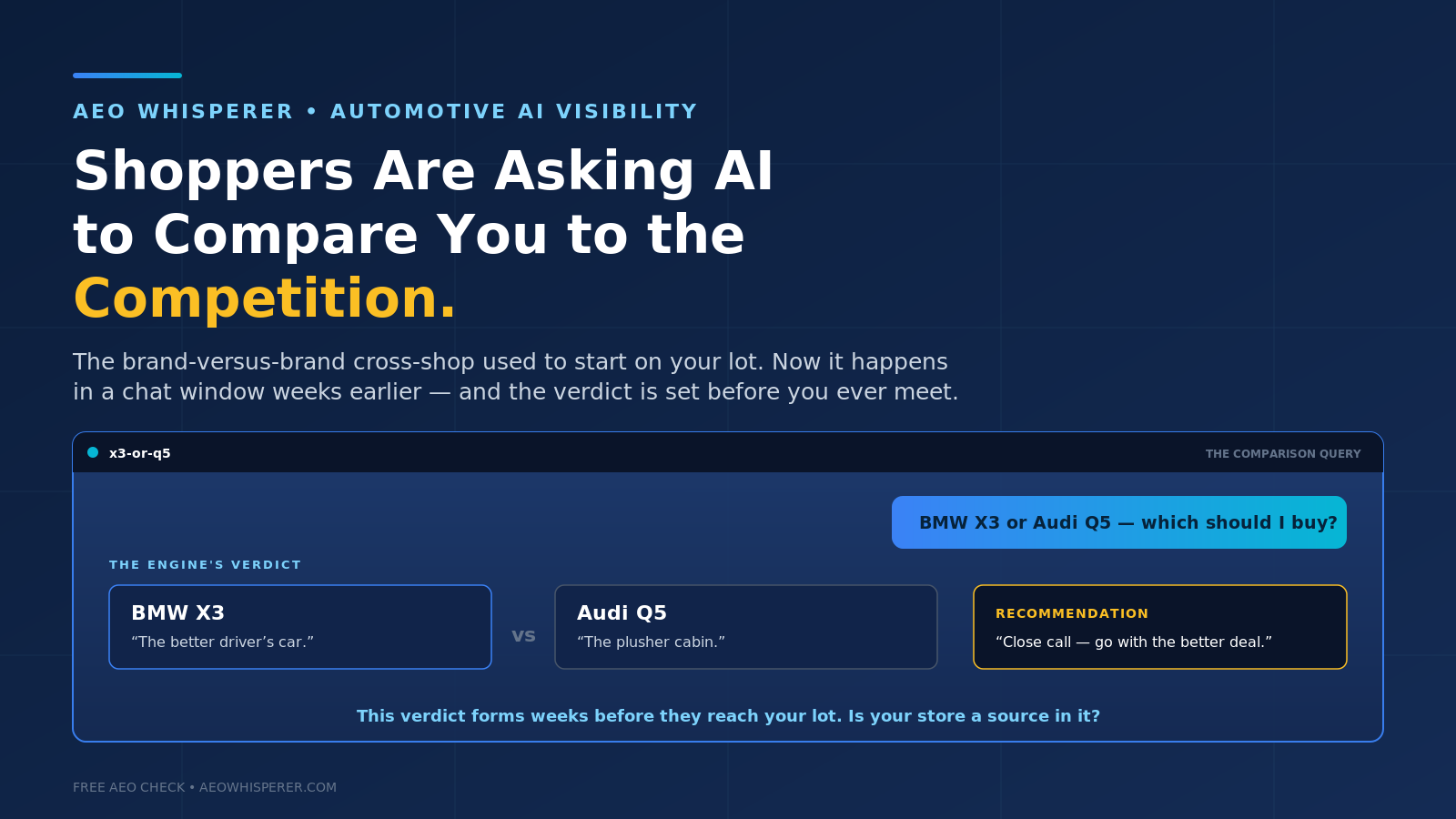
A buddy of mine who's been cross-shopping a midsize SUV forwarded me a screenshot last week. He'd asked ChatGPT, "BMW X3 or Audi Q5 — which should I actually buy?" and the answer ran four tidy paragraphs comparing ride quality, interior tech, resale value, and cost of ownership before landing on a pick. What stopped me wasn't the verdict. It was the timing. He'd done all of that — the brand-versus-brand wrestling that used to start on my showroom floor — before he'd talked to a single dealer. Including me.
That's the conquest battle in 2026, and a big chunk of it is now being fought in a chat window none of us can see.
The comparison moved upstream of you
For as long as I've been in this business, the cross-shop was something we won or lost in person. A customer walked in torn between two brands, and a good salesperson laid the two vehicles side by side, drove them both, and made the case. We owned that moment. Now the first version of that conversation happens with an AI engine days or weeks earlier, and by the time the shopper rolls onto the lot, they've often already absorbed a verdict — "the Q5's interior feels more premium," "the X3 is the better driver's car," "they're a wash, so go with whoever gives you the better deal." Whatever the engine said is the frame they're walking in with, and we're now arguing against an opinion we never got to shape.
Where the engine gets its opinion
Here's the part most GMs haven't thought through. When an engine compares two brands, it isn't pulling its take out of thin air — it's stitching together whatever it has read across the web about both vehicles. Professional reviews, sure. But also owner forums, YouTube transcripts, Reddit threads, spec pages, and — this is the piece dealers sleep on — comparison content published by dealerships and third-party sites. If the richest, clearest, most current "X3 vs. Q5" breakdown the engine can find lives on a competitor's site or a national aggregator, that's the voice shaping the answer. If a strong version of that comparison lives on your site, you've got a real shot at being a cited source in the very conversation that decides which brand the shopper drives first.
The frustrating reality is that almost nobody at the store level is writing this content. We write VDPs and we write specials. We don't write the honest, useful "here's how our vehicle stacks up against the one you're also considering" piece — even though that's exactly the question the shopper is typing into the engine.
Why this is a conquest problem, not a branding one
It's tempting to file this under "let the manufacturer worry about brand image." But the comparison query is where conquest sales are actually won and lost, and conquest is how a franchise grows beyond its loyal base. When the engine compares your brand to a rival and the answer is vague, dated, or quietly tilted toward the other guy, you're not losing a branding contest in the abstract — you're losing a specific in-market shopper who was genuinely torn and just got nudged the other way. Multiply that across every "X3 vs. Q5," "X5 vs. Q7," "3 Series vs. C-Class" query running in your market every week, and it adds up to real units.
What to actually do this week
You don't need a national strategy for this. You need to own the comparisons that matter in your market. Pick your three or four most-cross-shopped vehicles — you already know what they are, because your salespeople hear the other brand's name every day — and make sure your own website has a genuinely useful, honest comparison page for each one. Not marketing fluff; the real stuff shoppers ask about: ride, tech, space, warranty, cost to own, what each one is actually better at. Be fair about where the other vehicle wins, because the engines reward content that reads as balanced and trustworthy, and shoppers do too.
Then make sure that content is current and that your site is actually readable by the engines — same front-door and labeling work I've written about before. A brilliant comparison page does you no good if the crawler can't get to it or can't tell what it is. And tie it back to your store: the shopper who reads your comparison and decides on the X3 should land one click away from your actual inventory and a way to book a drive.
Get into the comparison, and you get into the deal
The brands will keep fighting the comparison war in national ads. But the version that decides your next conquest sale is happening one shopper at a time, inside an engine, weeks before they reach you. You can either be a trusted voice in that conversation or sit it out and argue against the verdict later. I'd rather be in it.
If you want to see how the engines describe your brand against the competition right now — and whether your store shows up anywhere in that comparison — the free AEO check at aeowhisperer.com runs real shopper questions through ChatGPT, Gemini, and Claude and shows you exactly how you come back. It takes about a minute, and it'll tell you fast whether you're in the conversation or watching it from the sidelines.